Why Music?
Why does music matter? Perhaps because it speaks where words fail. It mirrors the rhythms of life with tension and release, chaos and harmony.


“We have fallen into the place
where everything is music.”
-Rumi
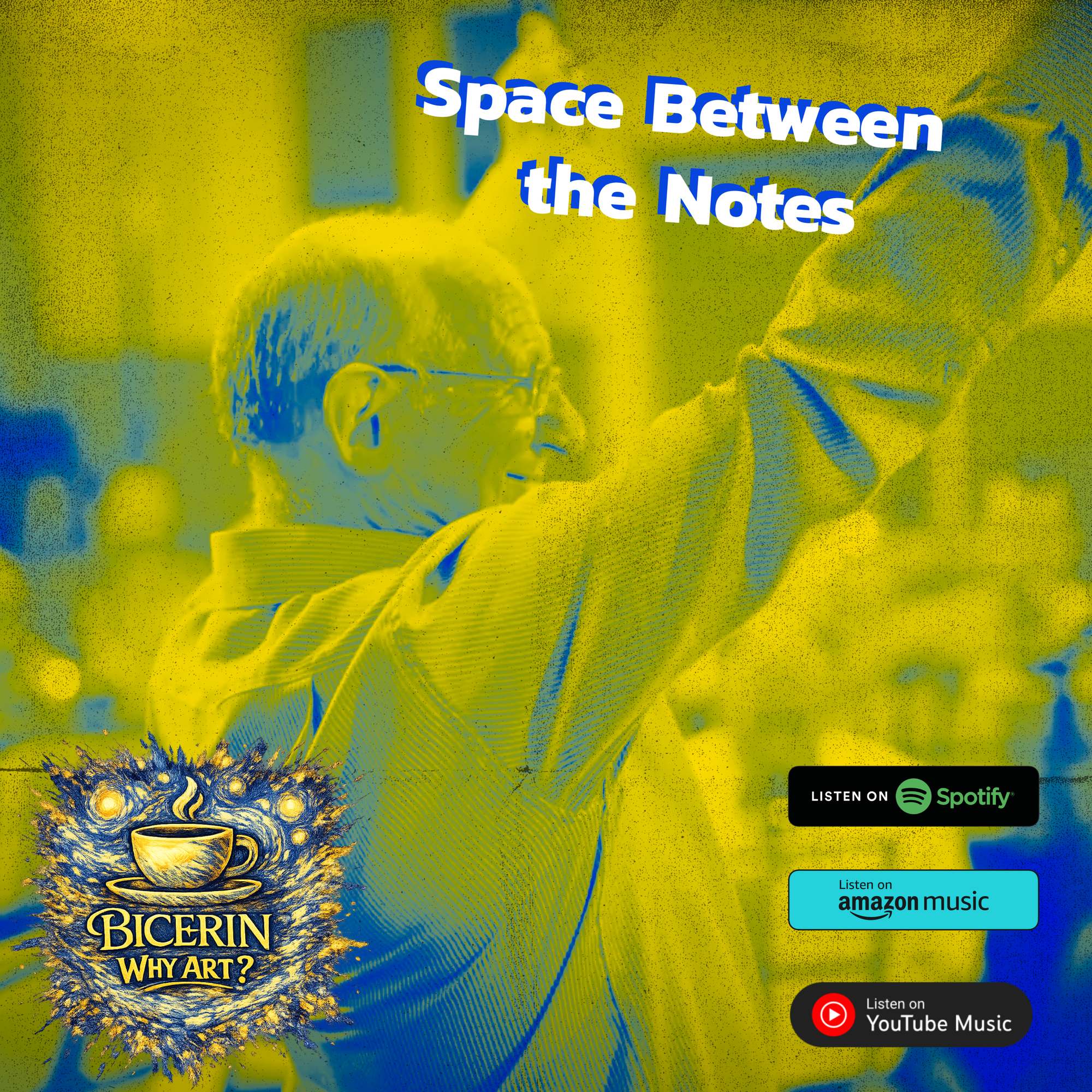
Space Between the Notes - Why Art? by Bicerin
My own journey with music is perhaps typical. I learnt it as a child, gave it up as an adult and now as I get older, I am curious about it once again. I have begun to question life in many ways, including what role music does or should have.
I needed to explore this and so I read about lots of things others have said about what they think makes music important.
Music as the Language of the World
Schopenhauer said, ‘Music is the melody whose text is the world’ and that it is ‘the language of feeling and passion as words are the language of reason.’ He had this belief that the insatiable Will governs all life and that it exists in humans as desire. Apart from asceticism, he argued contemplation of the arts is the only way to escape this Will and reduce our suffering. Like Buddhists before him, he seems to say that the more we forget who we think we are, the less we suffer.
Music allows us, according to Schopenhauer, to forget who we are in a very profound way because it is not a representation of anything that manifests in the world but instead it is depicting reality itself.
From a Christian perspective, Simone Weil the 20th century French philosopher, believed that music aids us in our contact with God. She likened attention to music to prayer, bringing us out of ourselves and the ideas we have around time and space. ‘Music unfolding in time,’ she says, ‘captures the attention and bears it away outside of time by bringing it to bear at each instant on what is.’
Another philosopher that lived at a similar time, Susanne Langer, felt that music articulates the patterns of our emotional lives as it contains tension, release, growth, etc. She argues also that it represents ’felt time’ rather than clock time. ‘Its dynamic structure can express the forms of vital experience which language is particularly unfit to convey. Feeling, life, motion and emotion constitute its import.’
When Music Becomes Meditation
These arguments rang true to my experience, and I was happy to explore this further in my feelings on this with my own listening, which I did. As I did so, I found that if I allowed music to be heard, without my trying too hard to analyse it, I could feel much as I do when I meditate deeply. There is a freedom from cares, a willingness to just feel what arises and a peace that seems unfathomable.
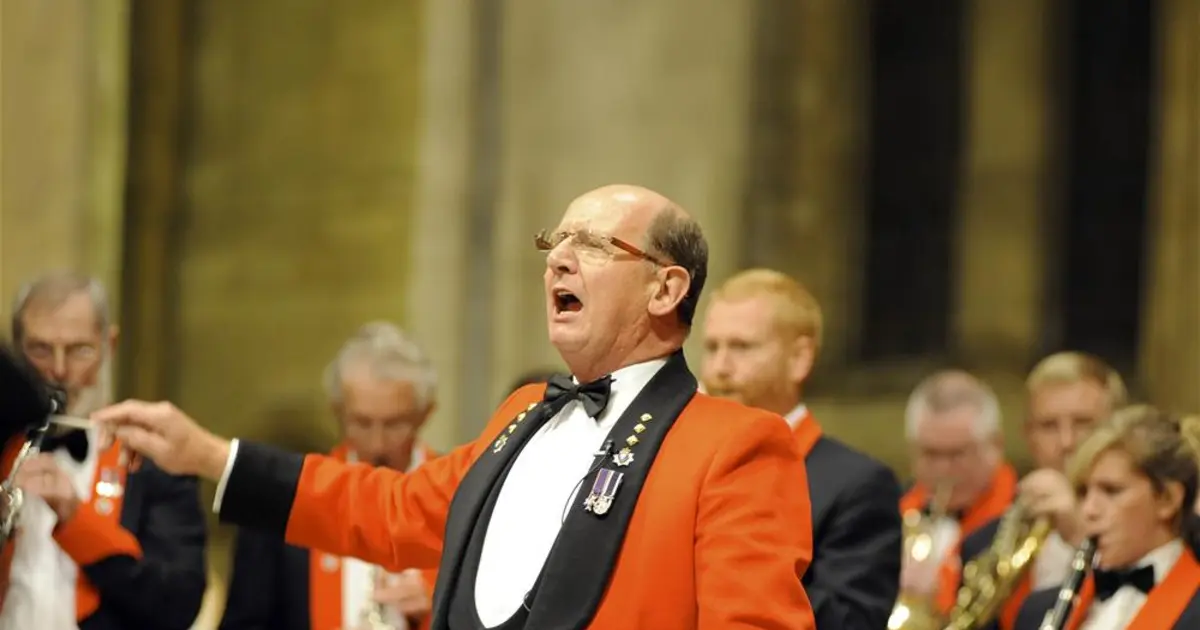
But what would a musician say of all of this? Someone who has made music their life, a composer, musical director, musician? Luckily, I had access to just such a person and asked David Cole to come on the podcast.
We spoke about many things, but one of the most important that I think came from this conversation is that in the end it’s all mysterious. Like all the most profound things in life, we’re not really sure why music does what it does.
We can speculate, and David and myself do a lot of this. We go from Bach to Schubert, to Raymond Dean and all the way up to the modern day with David himself. He gives insight into what is poured into a composition and how it feels to perform it, what the audience add to the experience, not to mention the context and cohesion of the musicians who are doing the performing.

Beyond the Self: Parallels with Spirituality
These things have a lot in common with spiritual practice. The lessening of importance of the self. Deep focused attention. The need to do something just for the sake of doing it, and how that makes everything better, music included.
Music, we discuss, speaks to the emotional life of humanity. There is logic to it, it is mathematical, regular, rule based. It repeats things, gets influenced and has no intrinsic point of its own. Yet it is essential to living a good life. It makes things better, not just aurally, but spiritually. It has the ability to confirm to us that we are indeed alive, mysterious, glorious and more than we think we are.
The glory of music is the glory of existence. The intrinsic logic of existence mirrored in small, digestible chunks in musical scores and pieces. Music contains tension, resolution, dissonance, consonance, crescendos, diminuendos, themes, variations, repetition, rhythm, and contrast in tone, pace and feeling and so too does life.
Life is full of these things, but most of the time, most of us are too busy, too distracted to see them. Music, along with other spiritual practices, bring us back to now. They make us see, feel and realise things that we otherwise fail to because of the way the world is and the way we are.
I’m sure we missed things and perhaps people have other opinions that differ from ours. Please have a listen to our conversation and let us know if you agree, disagree or have something to add to the discussion.
This new series, Why Art? will continue soon with conversations around the visual arts, literature, yoga, theatre, musical theatre, dance, poetry and more. Stay tuned and join us on this journey.
Useful Links

 Antonello


Schopenhauer on Music


👉 Clear explanation of music as symbolic expression of feeling.


 Contributors to Wikimedia projects